The Evolving IT Landscape in India: What's Driving Demand in 2026 :
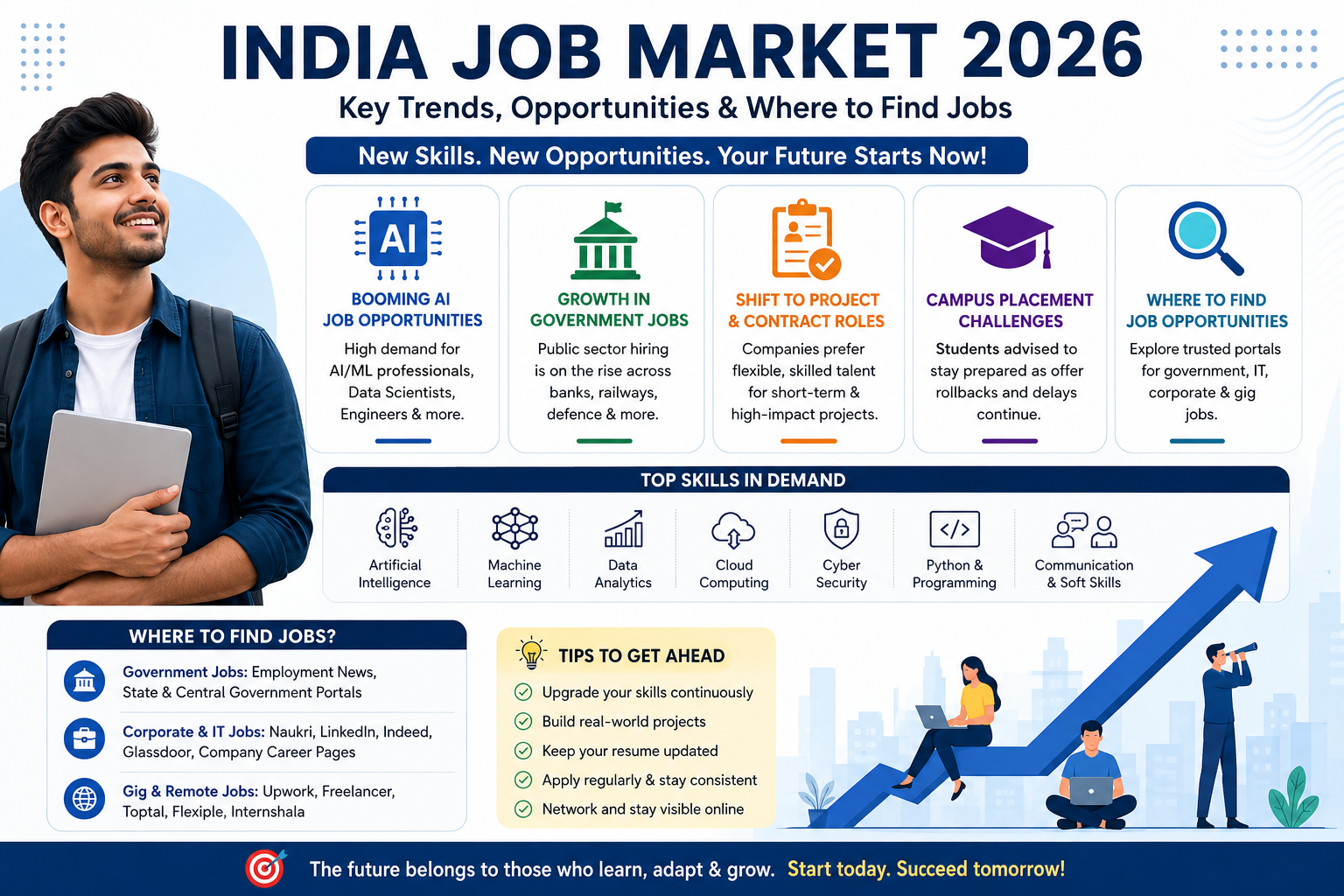
India’s IT sector is set for renewed momentum in 2026, driven largely by the rapid adoption of AI across enterprises. Generative AI, automation, and data-driven systems have moved from experimentation to execution, reshaping how companies build products and deliver services.
Alongside this shift, growing investments in cloud infrastructure, data platforms, and cybersecurity are accelerating demand for future-ready tech skills. As organizations focus on delivering real business outcomes rather than just transformation, roles that blend technical expertise with strategic thinking are becoming more valuable than ever.
How AI is reshaping traditional IT roles?
AI stands as the biggest game-changer in India's IT sector today. This widespread adoption creates a high demand for specialized tech roles. AI, ML, data analytics, and cloud technologies positions will increase.
The job market shows this change clearly, as companies want to hire professionals with AI skills.
Professionals must keep learning to succeed in this changing landscape. Workers would need new skills to stay competitive. Quick adapters will lead India's tech revolution.
Top 10 Most In-Demand IT Jobs in India :
| Job Role | Average Salary (per annum) | Entry-Level Salary (per annum) | Senior-Level Salary (per annum) |
| AI/ML Architect | ₹21 - ₹44 lakhs | ₹7 lakhs | ₹34+ lakhs |
| IoT Solutions Architect | ₹9 - ₹34 lakhs | NA | ₹32 - ₹35 lakhs |
| Cloud Architect | ₹8 - ₹25 lakhs | ₹3 - ₹8 lakhs | ₹16 - ₹25 lakhs |
| Data Scientist | ₹7 - ₹15 lakhs | ₹5 - ₹15 lakhs | ₹12 - ₹23 lakhs |
| Cybersecurity Specialist | ₹7 - ₹14 lakhs | ₹3 - ₹5 lakhs | ₹12- ₹14 lakhs |
| Blockchain Developer | ₹4 - ₹10 lakhs | ₹4 - ₹7 lakhs | ₹5 - ₹23 lakhs |
| DevOps Engineer | ₹5 - ₹12 lakhs | ₹4 - ₹8 lakhs | ₹10 - ₹22 lakhs |
| Full Stack Developer | ₹5 - ₹10 lakhs | ₹4 - ₹7 lakhs | ₹10 - ₹23 lakhs |
| Big Data Engineer | ₹5 - ₹12 lakhs | ₹4 - ₹7 lakhs | ₹11 - ₹22 lakhs |
| UI/UX Designer | ₹4 - ₹7 lakhs | ₹3 - ₹6 lakhs | ₹7 - ₹13 lakhs |
(Table Source: Glassdoor India)
1. AI/ML Architect :
"A year spent in artificial intelligence is enough to make one believe in God." said by Alan Perlis, First recipient of the Turing Award
AI/ML Architects have become crucial players in Indian enterprises as advanced technology changes the digital world. Indian companies plan to integrate AI into their processes by 2026, making these architects among the most demanding jobs in India with exceptional career growth.
Key Responsibilities and Daily Tasks :
AI/ML Architects connect data scientists, database administrators, developers, operations teams, and business executives. They design and implement sophisticated machine learning solutions while managing AI initiatives across organizations.
Their typical day includes:
- Creating architectural approaches for AI software and hardware integration
- Working with stakeholders to spot AI opportunities that turn business vision into technical reality
- Reviewing and choosing suitable AI technologies from open-source and commercial options
- Managing the development and training of machine learning models
- Checking AI tools and practices to ensure continuous improvement
- Teaming up with security professionals to alleviate risks like training data poisoning and model theft
Essential Skills and Qualifications :
The path to becoming an AI/ML Architect needs both technical expertise and people skills. Most roles need a Master's or PhD in Computer Science, Artificial Intelligence, or related fields. You can also consider gaining the required skills by enrolling in an AI and Machine Learning course.
Companies look for technical skills in programming languages like Python and Java. They want expertise with machine learning frameworks such as TensorFlow and PyTorch, and deep knowledge of data processing techniques. Cloud platforms (AWS, Google Cloud, Azure) and DevOps workflows have also become vital.
The core team needs strong leadership abilities, excellent communication skills, and a cooperative mindset.
2. Cloud Architect :
Cloud computing is the lifeblood of technology for businesses in India, and it will create an unprecedented need for skilled Cloud Architects in 2026. Organizations are moving to cloud platforms faster, making it vital for these professionals to design and implement scalable digital infrastructure solutions.
Essential Qualifications :
Getting relevant certifications is vital to position yourself for high-paying tech jobs in the cloud domain in India.
Cloud Architects need both technical and soft skills.
- Technical Skills - Cloud computing fundamentals, deep knowledge of cloud services, and knowing how to design economical solutions are the foundations of success. Knowledge of networking, systems design, and database administration completes the technical toolkit.
- Soft Skills - Good communication skills for better understanding and collaboration.
Career Progression :
Cloud architecture stands out among future IT jobs in demand in 2026 with exceptional salary potential.
Professionals start in supporting roles where they learn valuable design and architecture skills. Experience and certifications help them progress to senior architect positions managing large cloud deployments across multiple locations.
This growth gets a boost from cloud services integrating with artificial intelligence, which creates new specialization opportunities.
3. Data Scientist :
Data has become the heart of modern business strategy. Data Scientists are now the key interpreters who turn huge amounts of information into useful insights. Data and AI investments offer great value to businesses, which makes data science one of the most demanding jobs in India.
Educational pathways and alternative routes :
People who want to land high-paying tech jobs in India in data science have several paths to choose from:
- Traditional degrees: Data Scientists typically have at least a bachelor's degree in computer science, mathematics, statistics, engineering, or physics. A master's or PhD gives an edge, especially when switching from non-technical fields.
- Bootcamps and online courses: Consider enrolling in the IIIT Hyderabad Artificial Intelligence and Machine Learning Course, which has an industry-standard curriculum and offers you the opportunity to learn from top faculty and industry leaders.
- Industry-driven projects: Leading data science schools in India are building alliances with tech companies. Students get internships, learn from industry experts, and work on real-life projects.
The balance between theory and practice matters most. Modern data science education focuses on experiential learning through real-world projects and case studies rather than just theory.
Tools and technologies to master :
Success in one of the highest-paid tech jobs in India requires expertise in key technologies:
- Programming Skills: Learn Python, R, SQL
- Tools: TensorFlow, PyTorch, and Sci-Kit-Learn
- Big Data Technologies: Hadoop and Apache Spark
- Master Cloud Platforms: AWS, Google Cloud Platform, and Microsoft Azure
4. Cybersecurity Specialist :
The digital world has changed a lot. Cybersecurity Specialists now rank among the highest-paid professionals in India's tech ecosystem. Companies need these digital guardians to protect their sensitive information and reliable infrastructure as they move toward digital transformation.
India's cybersecurity market is booming. More sophisticated cyber threats and rapid digital adoption across industries fuel this growth. Cybersecurity Specialists do more than protect data. They monitor, direct, contain, and fix IT threats while taking an all-encompassing approach to organizational security.
Certification and Specialisations for Security Specialists :
People aiming for high-paying jobs in the IT sector should get relevant certifications by enrolling in a cyber security certification course.
Common certifications you can consider include CompTIA Security+, Certified Ethical Hacker (CEH), and Certified Information Systems Security Professional (CISSP).
For specialized and leadership roles, consider CISA (Certified Information Systems Auditor) and CISM (Certified Information Security Manager).
According to common job descriptions, key specializations that security professionals need to have include:
- Information Security
- Penetration Testing
- Cloud Security
- Digital Forensics
5. Blockchain Developer :
Blockchain technology continues to grow faster in Indian industries. This growth creates substantial career opportunities and places Blockchain Developers among the high-paying jobs in the IT sector. The best part is that it is highly becoming an integral part of various industries, including:
- Finance
- Agriculture
- Healthcare
Learning resources and community support
Aspiring blockchain specialists can choose from several learning paths. Gain coding experience or learn via online courses.
Web developers can naturally progress into blockchain development. Your experience with programming fundamentals and third-party tools creates strong foundations.
Success in this change requires:
- Knowledge of at least one programming language like Java or Python
- Strong grasp of cryptography and data structures
- Deep understanding of networking concepts and distributed systems
- Expertise in web application frameworks
6. DevOps Engineer :
DevOps has become an innovative force in the tech industry. DevOps Engineers now serve as linchpins in modern development teams. Companies need faster and more reliable software delivery, which has secured these professionals' place among the IT jobs in demand in 2026.
Core responsibilities in modern tech teams :
DevOps Engineers lead cultural change by connecting development and operations teams that were traditionally separate. They manage the entire software development lifecycle and ensure continuous delivery of high-quality applications. Their daily work involves automating build processes, managing CI/CD pipelines, and monitoring critical production applications.
Tools and methodologies to master :
Success in one of the highest-paying IT jobs in India requires expertise in several key technologies:
- CI/CD Tools: Jenkins, Travis CI, and CircleCI for automated testing and deployment
- Containerization: Docker and Kubernetes for application portability and orchestration
- Configuration Management: Ansible, Puppet, or Chef for consistent environments
- Infrastructure as Code: Terraform or CloudFormation to define infrastructure programmatically
- Monitoring Solutions: Prometheus, Grafana, ELK Stack for system visibility
7. Full Stack Developer :
Full Stack Developers stand out in India's competitive tech world because of their adaptability. This makes them one of the IT jobs in demand in 2026. These professionals excel at connecting front-end interfaces with back-end systems, while specialists focus on just one area. Employers across the country value this combination of skills more than ever.
Full Stack Developers take care of both client-side interfaces and server-side logic. They work like two specialists rolled into one.
Technology stacks in the highest demand :
The most popular technology combinations in 2025 include:
- MERN Stack: MongoDB, Express.js, React, and Node.js, ideal for creating dynamic web applications
- MEAN Stack: Substitutes Angular for React, offering detailed JavaScript-based development
- LAMP Stack: Linux, Apache, MySQL, and PHP, a reliable, economical option for web development
- Spring Boot: Popular for enterprise-level Java applications with security and scalability
Consider enrolling in a Full Stack Development Course to gain the required skills and learn the essentials of full stack development via structured programming and a learning environment.
How to Build Full Stack Portfolio :
Your portfolio matters more than your resume when landing high-paying jobs in the IT sector. Quality beats quantity - focus on 3-5 excellent projects instead of many average ones.
Each project should include:
- A clear problem statement
- Tools and languages used
- Your solution and final results
Show projects that display your front-end skills (HTML, CSS, JavaScript) and back-end expertise (Python, Node.js, database management). Employers want to see your code working. Add links to live demos and GitHub repositories.
8. IoT Solutions Architect :
The Internet of Things (IoT) brings together physical devices and digital intelligence, creating unique opportunities for specialists who can work in both worlds. These professionals orchestrate the complex symphony of connected devices throughout India's fast-evolving digital world.
Technical Skills and Domain Knowledge Requirements :
Today's IoT Solutions Architects need diverse skills that connect hardware and software domains:
- Programming proficiency: Python, C++, and Java skills are the foundation for embedded applications
- Hardware expertise: Deep knowledge of sensors, microcontrollers, and embedded systems
- Networking knowledge: Understanding of MQTT, CoAP, and HTTP protocols for device communication
- Security capabilities: Strong protection measures for IoT networks against sophisticated threats
- Cloud computing: Hands-on work with AWS, Azure, or Google Cloud for device management and data analysis
9. Big Data Engineer :
Big Data Engineers have become crucial navigators who guide organizations through massive information oceans to find valuable insights. This role ranks among the IT jobs in demand and combines technical expertise with business knowledge.
Must-Have Skills for Big Data Specialist :
A Database Administrator's (DBA) path to becoming a Big Data Engineer represents natural career growth.
- Proficiency in programming languages like Python, Java, and Scala
- Expertise with distributed computing frameworks (Hadoop, Spark)
- Experience with NoSQL databases beyond traditional SQL systems
- Knowledge of cloud infrastructure and service implementation
10. UI/UX Designer :
UI/UX design has transformed from a bonus feature into a business essential. This evolution has placed UI/UX designers among the IT jobs in demand in 2026. The field brings together creative and analytical thinking, which makes it perfect for people who love both art and technology.
Why Its in Demand :
Digital products have exploded in recent years, creating a huge need for UI/UX professionals. The job market looks promising, and companies now understand that user experience directly affects how satisfied and loyal their customers become.
Key Skills Needed :
A successful UI/UX designer needs these technical and soft skills:
- Research capabilities: Knowing how to collect both quantitative and qualitative user data
- Visual design expertise: Deep understanding of typography, color theory, and layout principles
- Technical proficiency: Good command over design tools like Figma, Adobe XD, and Sketch
- Communication skills: Clear explanation of design decisions to stakeholders
- Wireframing and prototyping: Building functional models of digital experiences